Leading schools for the future: Is the present model broken? #designforward
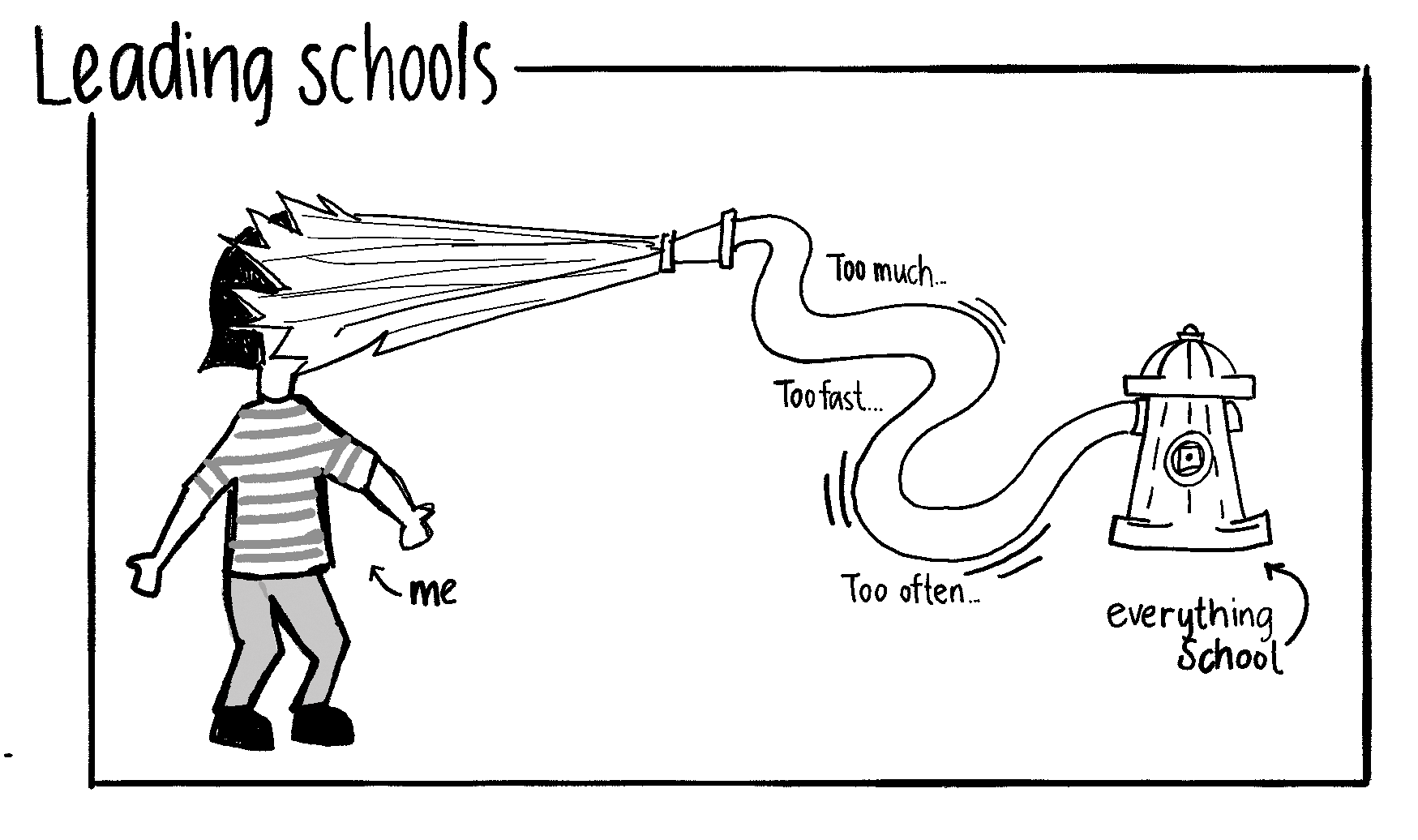
🚿 Is the complexity of leading a school akin to drinking from a firehose? When everything is urgent, it’s hard to see the big picture. That's why we advocate intentional design for the future.

At The Learning Future we work closely with school principals and executive teams to co-design the strategic architecture for the future. Our discussions and conversations show me that the Principal-buck stops-here model is becoming increasingly too complex for a single human to endure.
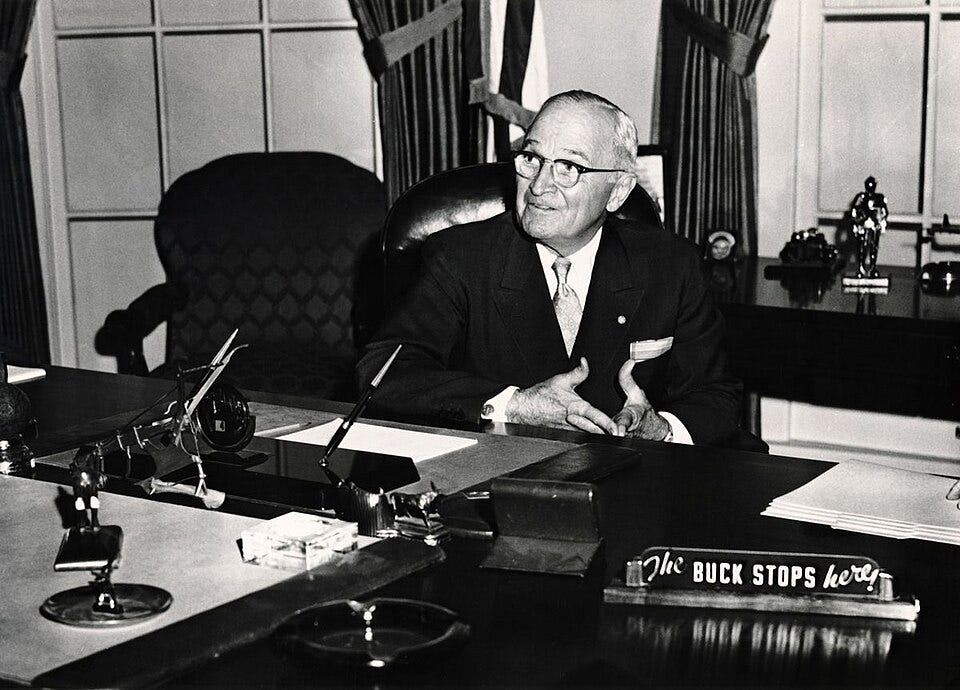
In 1945 President Harry S. Truman, kept a sign on his desk with inscribed The Buck Stops Here to signify that he would take final responsibility for decisions. The phrase was used to counter the idiom ‘pass the buck’, to avoid responsibility.
The buck stops here model, while the badge of strong leadership, is now showing its strain in the face of today’s complexity. School leaders must be educational visionaries, in addition, they're expected to be culture shapers, crisis navigators, compliance officers, communicators, and more. Complexity doesn’t yield to command-and-control; it demands a new way to lead. When the weight of a school’s transformation rests on one set of shoulders, it limits both innovation and opportunities for regeneration. In a world of accelerating change and interdependent systems, we need to rethink leadership, reshaping it as a shared endeavour that is distributed, relational, and designed for adaptability in complexity. In addition to this, many principals I speak to indicate that insufficient people with potential aspire to the role. Something is broken.
Is it the model?
Last week, Louka Parry and I were working with a group of principals on our final strategic design session of the series. We drilled down on what it meant for the principal to be culture builder and communicator-in-chief, drawing on Frederic Laloux’s Culture Model from Reinventing Organizations.
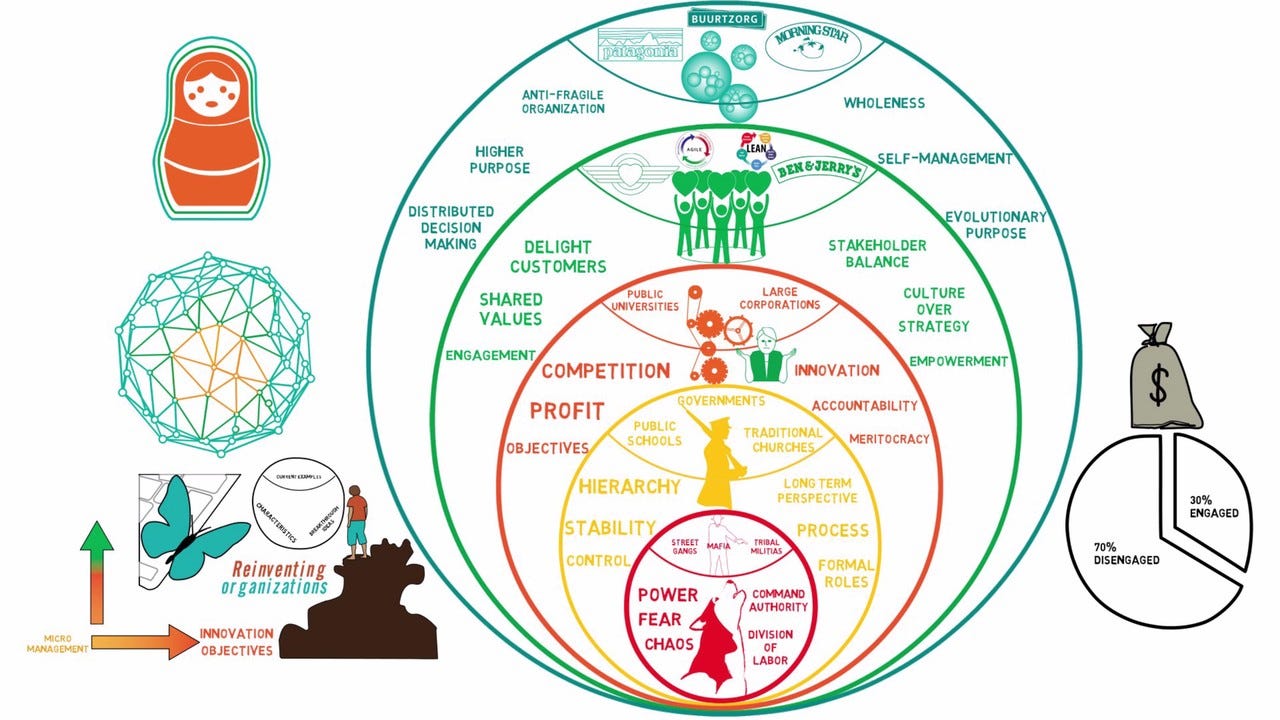
Laloux’s model, invites us to think about the relevance of the Red or Amber cultural paradigms. These are the default responses to the relentless surge of problems to be managed:
Red marked by top-down authority and reactive leadership
Amber characterised by rigid hierarchies, rules, and roles.
These models may offer stability, but they are increasingly misaligned with the dynamic, complex realities of life and school today. When our aspiration is to develop adaptive, empowered learning cultures, we aim for the Green and ultimately Teal paradigms:
Green values participation, collaboration, and purpose, characterised by relationships, inclusivity, and growth.
Teal, the most future-focused, promotes self-management, evolutionary purpose, and wholeness.
For schools navigating complexity and preparing students for an uncertain future, shifting toward these paradigms isn’t just idealistic, it’s essential. That’s why we advocate for broadly inclusive co-design.
In my experience, visiting schools across Australia and globally, I see that we are too often stuck in the Red or Amber paradigms. The urgency of managing schools today, gives little room to step out of the problem-fix loop to go deeper into transforming mental models, as Senge suggests.
If our current leadership model is no longer fit for purpose, how might we imagine and transition toward a future that is? As a starting point for strategic dialogue, we often apply Sharpe’s Three Horizons framework to understand and navigate the shift. It recognises that while the present system (Horizon 1) dominates, seeds of a more adaptive future (Horizon 3) are already visible. The challenge lies in nurturing these emerging practices, while acknowledging the transitional space (Horizon 2) where tensions, experimentation, and reinvention live.
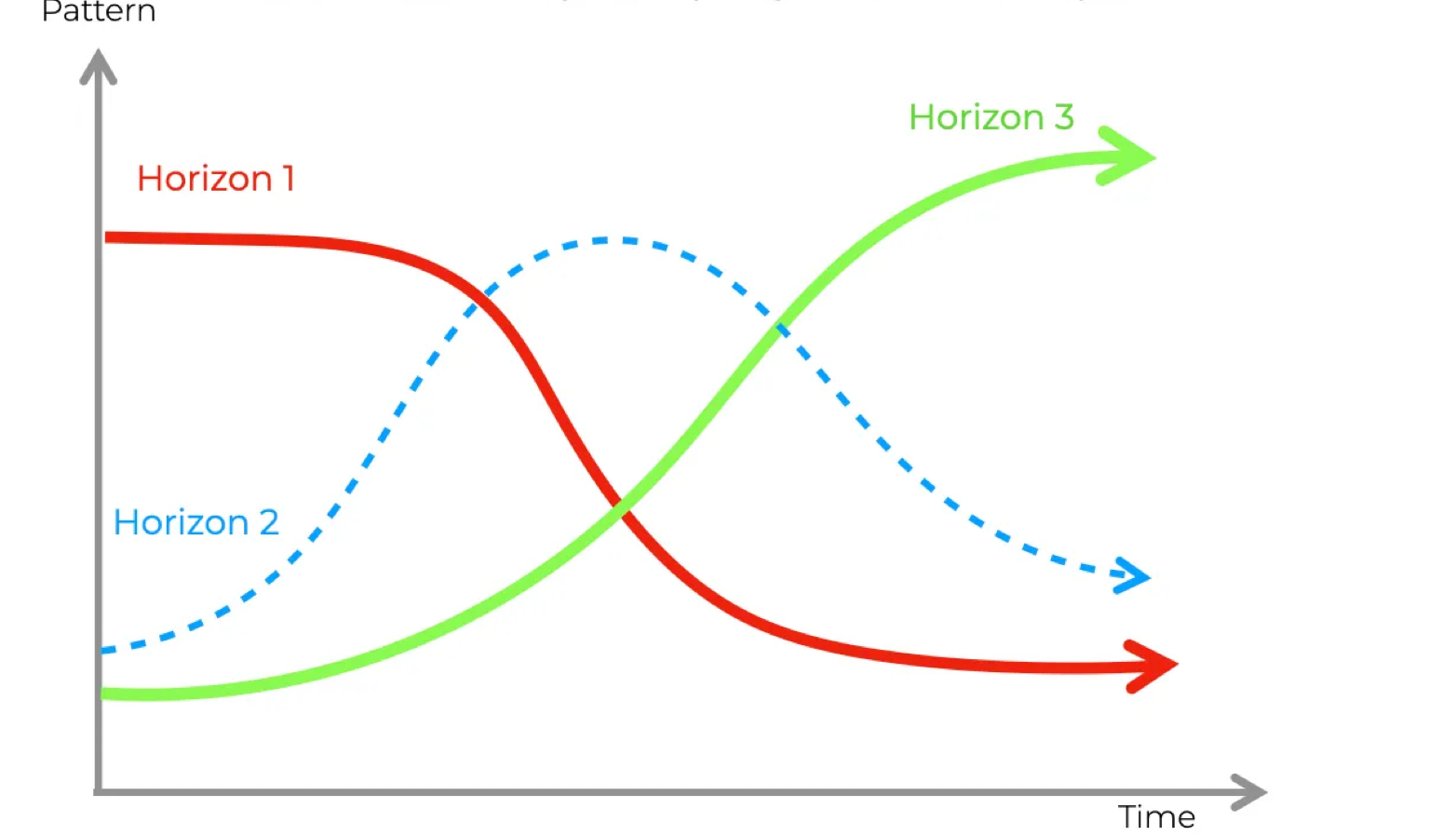
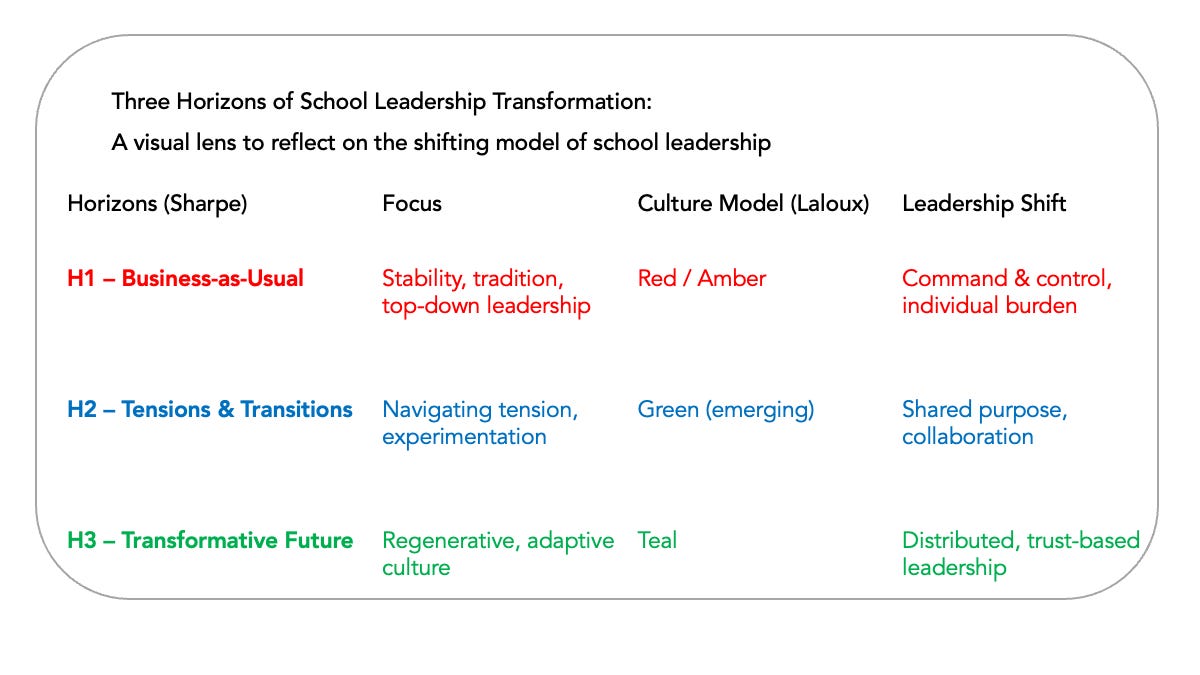
As we look across the horizons, it becomes clear that the future of school leadership can’t be an extension of the past. Horizon 1, the traditional, heroic leadership model is faltering under the weight of complexity. Horizon 3 invites us to imagine something richer, more relational, and future-fit. But the work of Horizon 2 is ours to do now: experimenting, questioning assumptions, and building the cultural capacity for transformation. For school leadership teams ready to move beyond the problem-fix loop, the challenge is not just to adapt but to intentionally design our preferred future.
But all this requires an investment of time, that commodity that is increasingly rare.
References:
Laloux, F. (2014). Reinventing organizations: A guide to creating organizations inspired by the next stage of human consciousness. Nelson Parker.
Sharpe, B. (2013). Three horizons: The patterning of hope. Triarchy Press.